Before and after: Two Fish Charters' new website
Captain Yuri Vakselis runs fishing trips from Key West to the Dry Tortugas, and his new website just went live. Here's what changed, and five decisions behind it that work on any charter's site.
Jon Persson
Co-founder, Websites & Systems ·
Captain Yuri Vakselis runs Two Fish Charters out of the Perry Marina on Stock Island, the key next door to Key West. His boat, the Lauren Jeanne, is a 50-foot catamaran with bunks for six, and his signature trip goes 70 miles west to the Dry Tortugas, where a group lives aboard for up to four days and fishes the reefs and ledges around the clock.
His new website went live on tortugas-fishing.com on October 26.
Two Fish Charters
Stock Island
Before
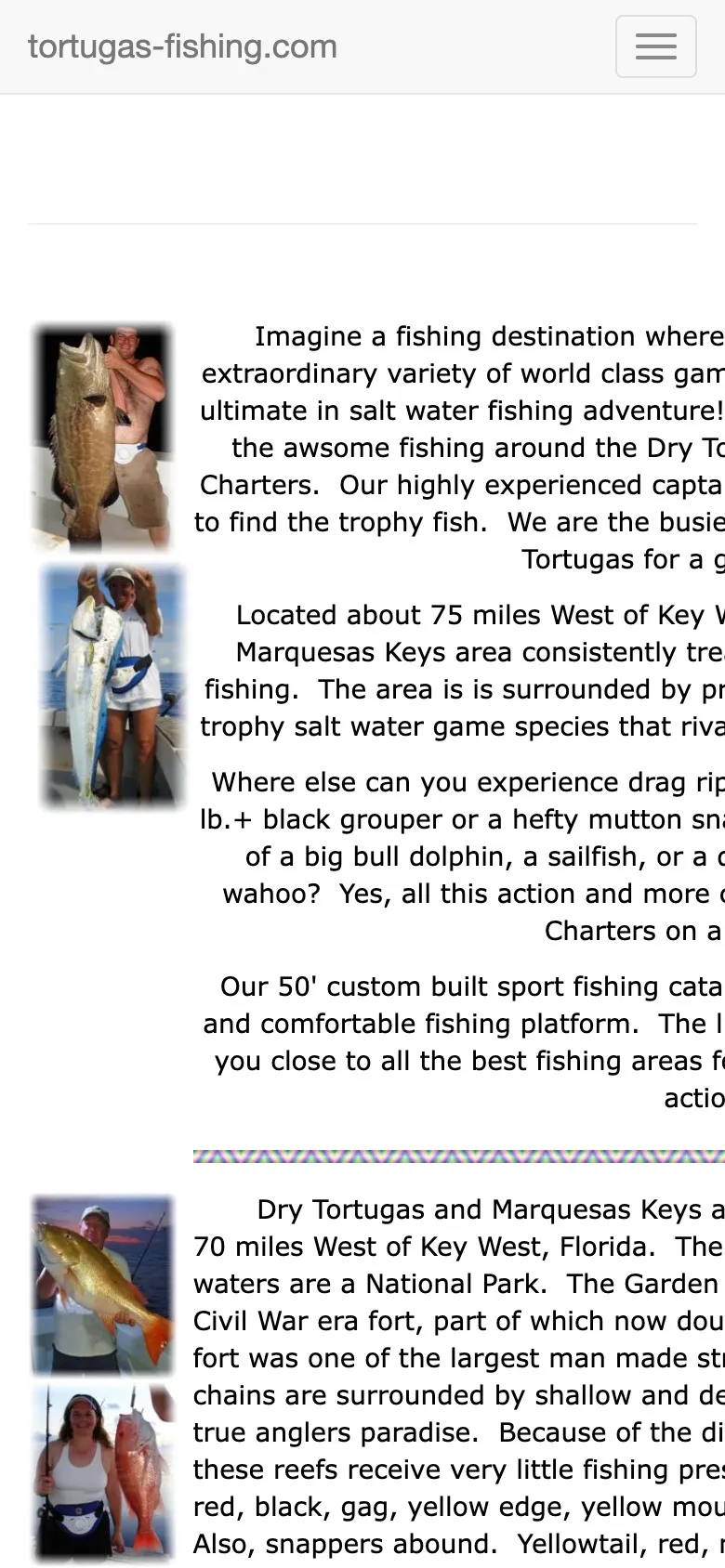
- Old site:No Book button
- Old site:No number to tap
- Old site:Text runs off
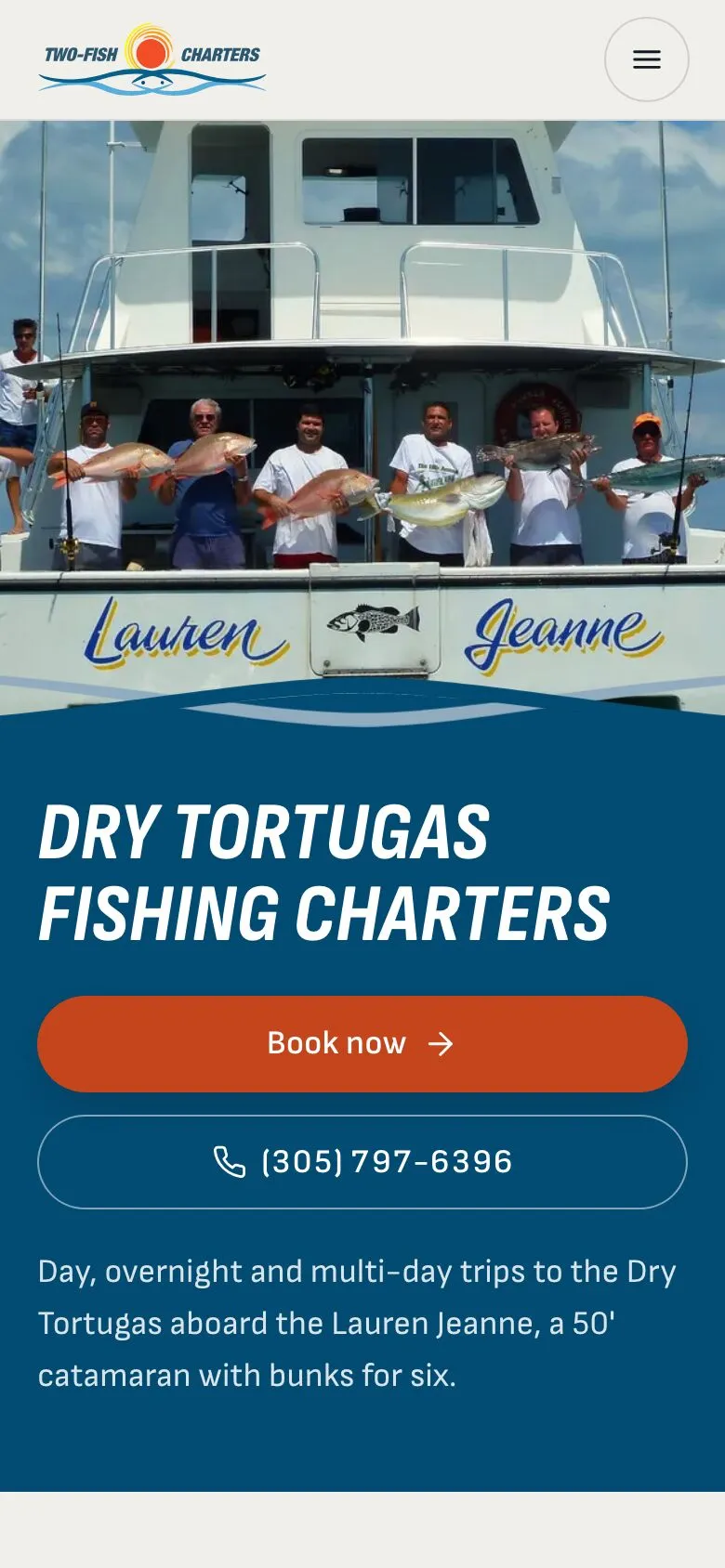
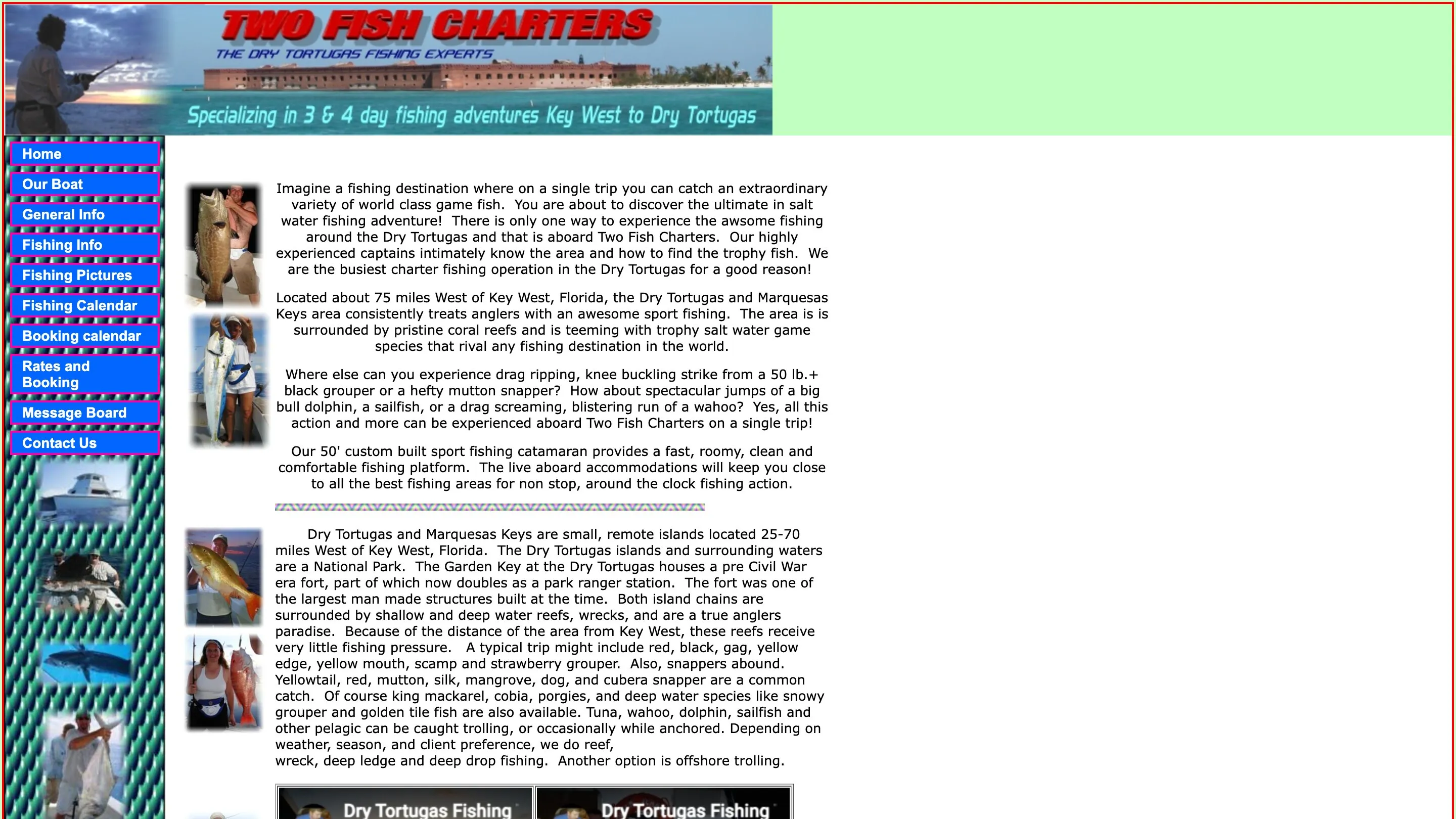
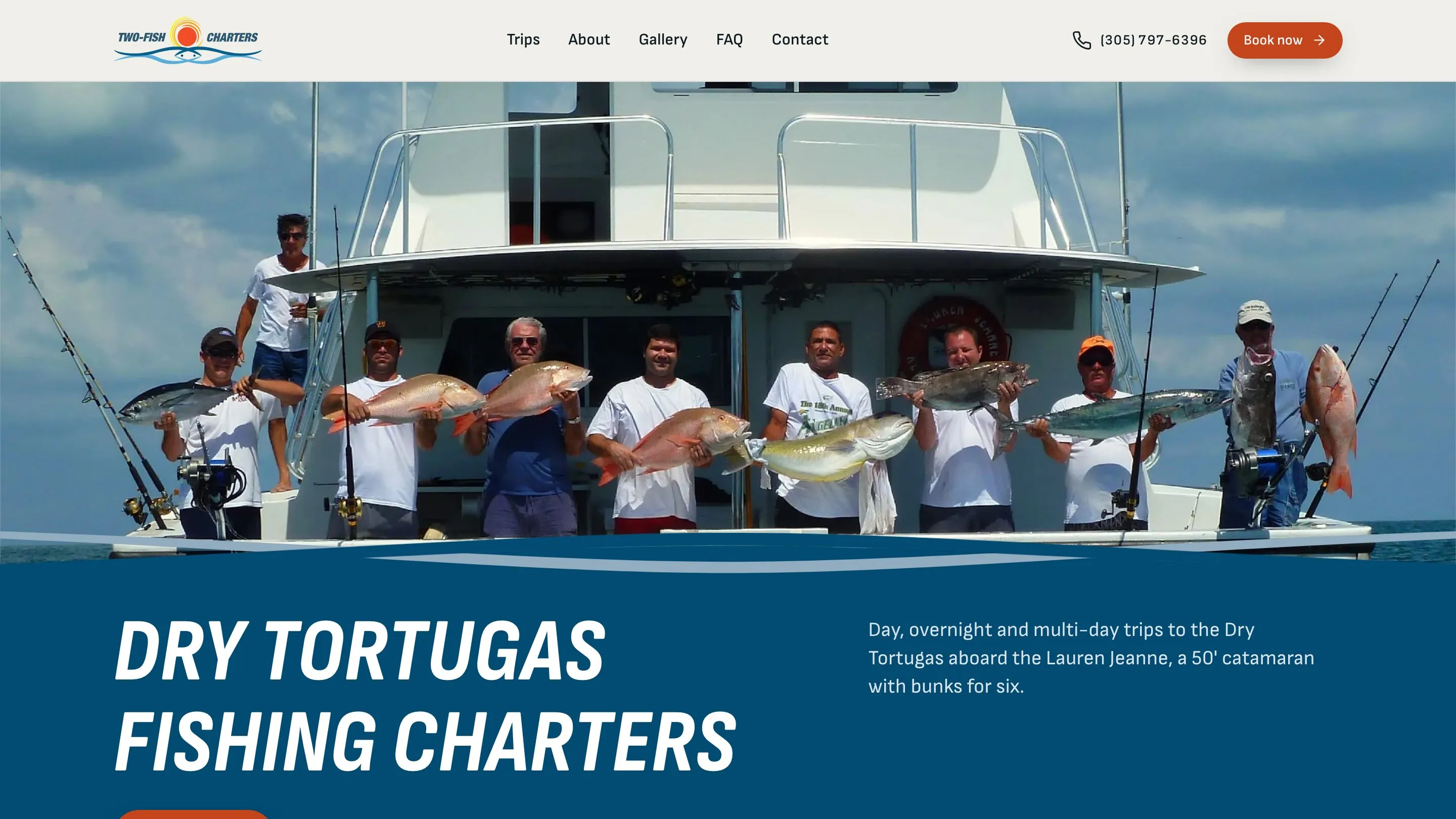
Here’s what we thought about while we built it. None of it is special to Yuri. If you’re about to redo your own site, or wondering why the one you have doesn’t bring in many trips, start with these five.
1. Lead with the words guests search
Yuri wanted to keep showing up on Google for Dry Tortugas fishing charters. So that’s the headline on his homepage, word for word, and the page title Google shows in its results.
A new website is when operators tend to swap plain words for a slogan like “Unforgettable offshore adventures.” Nobody searches for that. Your headline and page title should use the words a guest types: the kind of trip you run and where you run it. If you have Google Search Console, its Queries report lists the searches you already show up for.
2. Forward every old page address
His old site had about a dozen page addresses that Google and his past guests knew: the homepage, the booking calendar, the general info page, the photo albums, and a separate phone version of the site. Every page on the new site has a different address.
So each old address now forwards to the page that replaced it, which web people call a 301 redirect. The old booking calendar goes to the new request form, the photo albums to the gallery, the general info page to the FAQ. A guest with an old bookmark, or Google following an old link, lands on the right page instead of “page not found.”
Skip this and a new site can lose the Google traffic the old one spent years building. Before your new site launches, ask whoever builds it for the list of old addresses and where each one will go. After it launches, type a few of the old ones in and see where you land.
3. Show the catch first
The top of the homepage is a photo of a row of his anglers on the back of the Lauren Jeanne, each one holding up a fish. The headline comes after it.
A group weighing three nights offshore wants to see the boat, the people on it and what they caught. A stock sunset tells them none of that. Pick your best photo of real guests with a real catch and put it at the top.
4. Put the prices on the page
Every trip shows what it costs: $2,500 for the full day, $4,200 for the overnight, and $6,200 to $8,200 for three or four days at the Tortugas, each for the whole boat and up to six anglers.
Plenty of charters leave prices off so people have to call. But the guest comparing three boats at 10 at night can’t call any of them. The boat with a price on the page is the one they can book or send a request to tonight, and the groups who were never going to spend $6,200 don’t tie up your phone finding out.
5. Write the deposit rules down
His FAQ explains deposits in plain words: $1,000 for the full day and overnight trips, $3,000 for the longer ones, paid by a PayPal link once Yuri confirms the date, the balance on the day, and the deposit back or a new date if he cancels for weather or a mechanical problem.
Most deposit arguments start with a guest who didn’t know the rules. Put yours where guests read them before they pay: on the trip page or the FAQ, and again in the booking confirmation.
See it for yourself at tortugas-fishing.com. If you’d like us to go through your site the same way, book a call.